
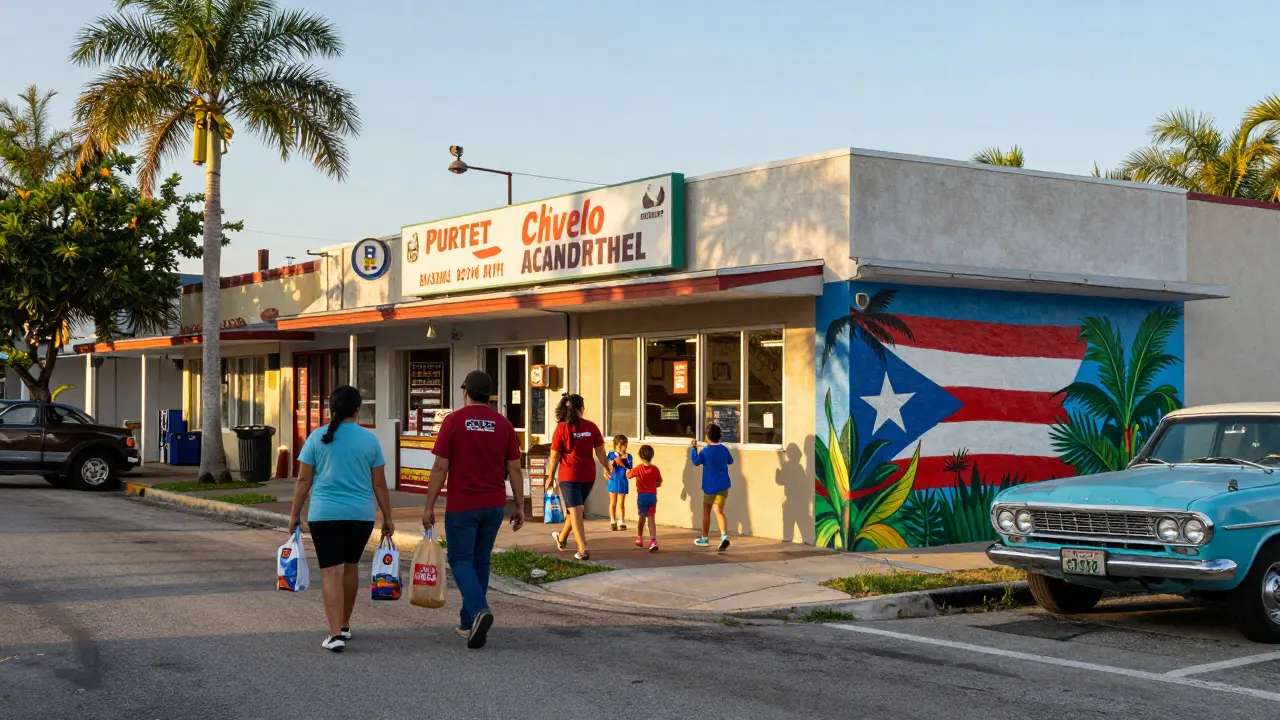
When you drive through Kissimmee, you’ll hear Spanish spoken more often than you might expect-not just any Spanish, but the distinct rhythm of Puerto Rican Spanish. It’s not a coincidence. Kissimmee has one of the largest Puerto Rican populations in Florida, second only to Orlando in some estimates. But why here? Why not Tampa? Why not Miami? The answer isn’t about tourism or theme parks. It’s about jobs, housing, and a chain of decisions made over decades by real people looking for a better life.
It Started With Jobs, Not Tourism
Most people assume Kissimmee’s growth is tied to Disney World. But Disney didn’t bring the Puerto Ricans. The real driver was agriculture-and later, construction and service jobs that grew out of it. In the 1980s and 1990s, Puerto Rican workers from New York and New Jersey started moving south for seasonal farm work. They picked citrus, tomatoes, and strawberries in the Osceola County fields. Unlike Florida’s older Cuban communities, who arrived through political exile, Puerto Ricans came because they were looking for work, not safety.
One key difference? Puerto Ricans are U.S. citizens by birth. They didn’t need visas. They didn’t need to navigate immigration paperwork. All they needed was a bus ticket and a job lead. And once one person found work in Kissimmee, they told their cousin. Then their neighbor. Then their whole block in the Bronx.
Housing Was the Real Game-Changer
In the early 2000s, housing prices in Orlando and Miami were climbing fast. Kissimmee, just 15 minutes from Disney, offered something rare: affordable single-family homes. A three-bedroom house in Kissimmee in 2005 cost about $120,000. In Miami, it was $250,000. In New York? Forget it.
Real estate agents noticed the trend. They started targeting Puerto Rican communities in New York with flyers in Spanish: "Cheap homes near Orlando." Realtors from Kissimmee even flew to the Bronx and Brooklyn to host open houses. Families who had been renting apartments for decades saw a chance to own a home with a backyard, a garage, and a driveway-something they couldn’t get back home.
By 2010, Kissimmee’s Hispanic population had jumped from 22% to 45%. Of that, over 60% identified as Puerto Rican. It wasn’t just numbers. It was churches, bakeries, and barber shops that started popping up along U.S. Highway 192. You could buy pasteles, get your hair done in a traditional Puerto Rican style, or find a doctor who spoke your dialect of Spanish.
The Domino Effect: Community Builds Itself
When a critical mass of people from the same background settles in one place, everything else follows. Schools started hiring bilingual teachers. The county library added Spanish-language books. Local businesses began offering Spanish menus and bilingual customer service. Even the police department started training officers in Puerto Rican Spanish dialects because it improved communication.
It became easier to live here than to leave. Why move back to New York when your kid’s school had a Puerto Rican cultural festival? Why pay $3,000 a month to rent in Brooklyn when you own a house here with a pool and no snow in winter? The emotional pull became as strong as the economic one.
By 2020, Kissimmee had over 45,000 residents of Puerto Rican descent-more than the entire population of many Puerto Rican towns back home. The island’s own government even recognized Kissimmee as a "Puerto Rican hub" outside the island. They sent officials to help with voter registration drives and cultural programs.
It’s Not Just About Money-It’s About Belonging
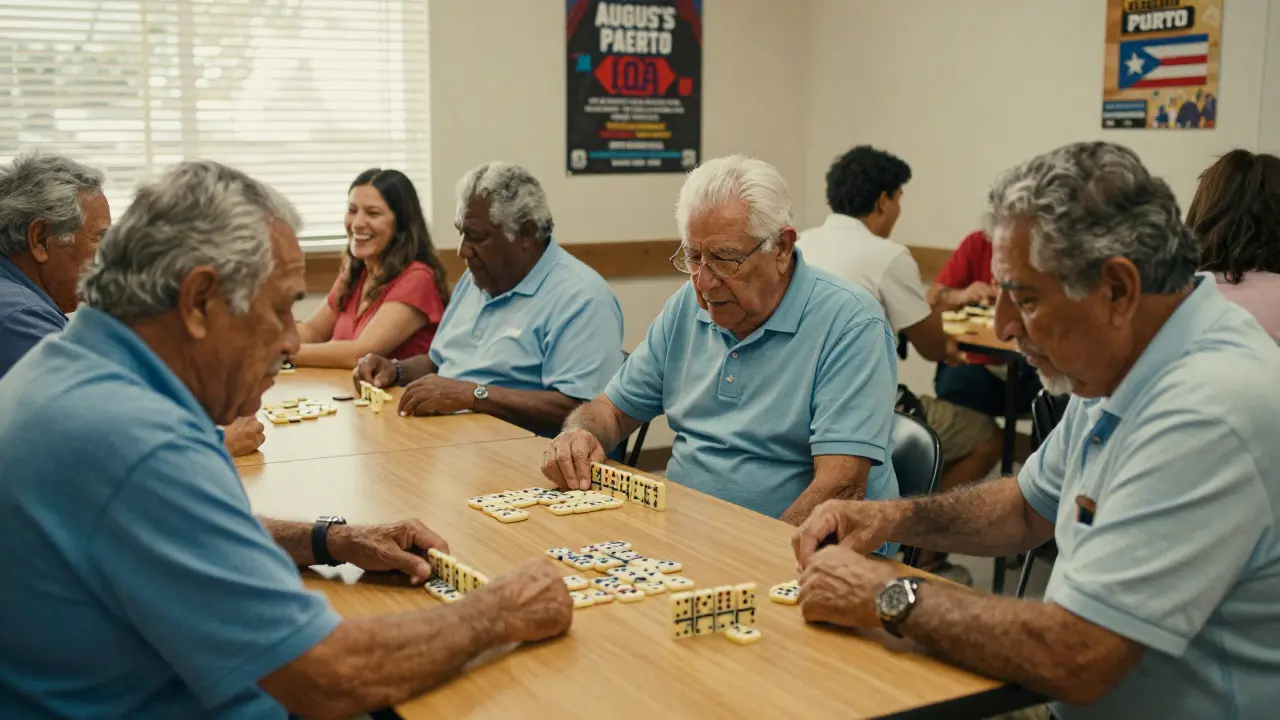
Many Puerto Ricans in Kissimmee still have family on the island. But they don’t feel like they’ve left home. They’ve built a new one. There are domino tournaments every Saturday at the community center. There’s a Puerto Rican festival every August that draws over 10,000 people. Local radio stations play salsa and reggaeton all day. You can buy arroz con gandules at the grocery store and hear someone say, "¡Qué loco!" at the gas station.
It’s not a colony. It’s not a neighborhood. It’s a community that grew organically, one family at a time. People didn’t come because Kissimmee advertised itself as a Puerto Rican destination. They came because it was affordable, welcoming, and full of people who looked like them, talked like them, and cooked like them.
What’s Different About Kissimmee vs. Other Florida Cities?
Compare Kissimmee to Miami. Miami’s Cuban population arrived in waves after 1959. They were refugees. They built a political identity. Kissimmee’s Puerto Ricans didn’t flee. They migrated. They didn’t come to protest. They came to work, raise kids, and buy homes.
Compare it to Tampa. Tampa has a strong Puerto Rican presence too, but it’s more scattered. Kissimmee’s community is concentrated enough to sustain its own businesses, schools, and cultural events. You don’t need to drive 30 minutes to find a Puerto Rican bakery here. It’s right down the street.
And unlike Orlando, which became a corporate hub with high rents, Kissimmee kept its small-town feel-even as it grew. That’s why families stay. It’s not just cheaper. It’s more human.
How Has This Changed Kissimmee?
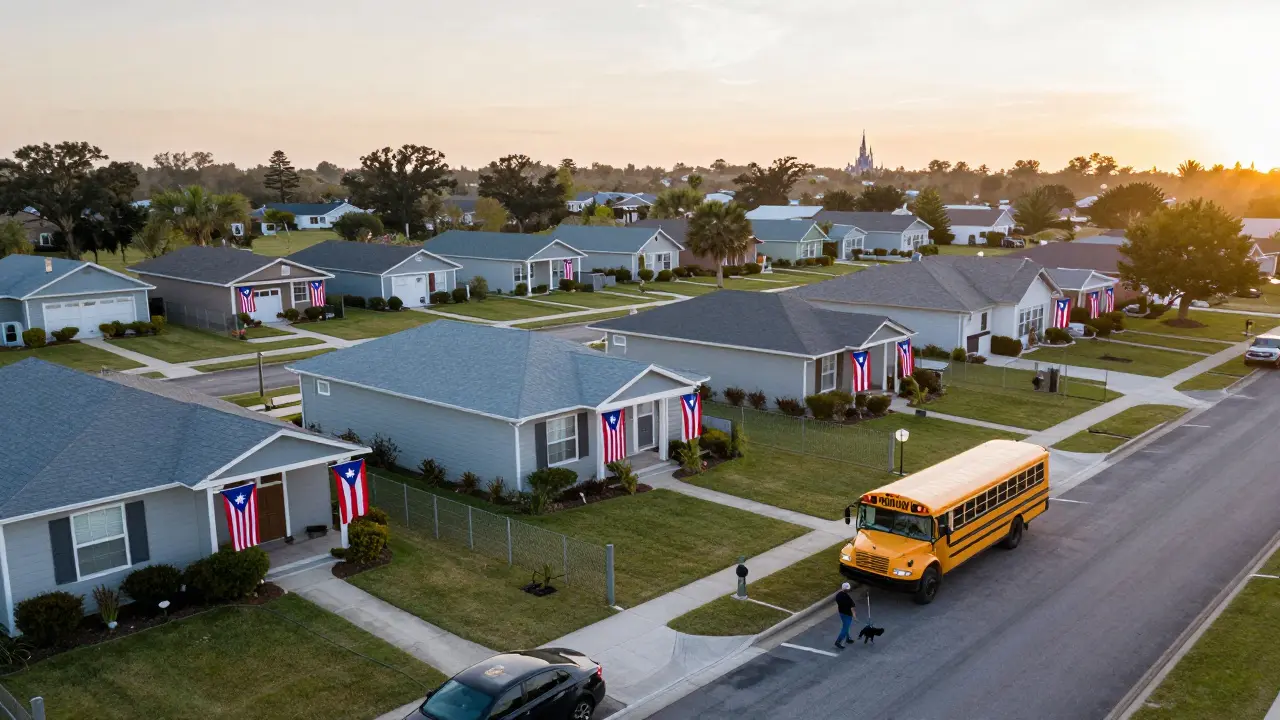
The city’s identity has shifted. It’s no longer just the "Gateway to Disney." It’s also a cultural crossroads. The school district now teaches Spanish as a first language in elementary schools. Local politicians run campaigns in Spanish. The city council includes Puerto Rican members. Even the local sports teams have adopted Spanish nicknames.
There’s been some friction, of course. Some long-time residents felt left behind. But over time, most have come to see the change as positive. New businesses created jobs. New families paid taxes. New energy filled the streets. The city’s population grew by 40% between 2000 and 2020-mostly because of Puerto Rican families.
What’s Next?
Kissimmee’s Puerto Rican community isn’t slowing down. More young people are staying after college. Some are starting businesses-taco trucks that serve mofongo, real estate agencies that specialize in helping island families buy homes, social media influencers who post in Spanglish.
And while Disney World still brings millions of tourists, the real heartbeat of Kissimmee now comes from the corner stores on Broadway, the abuela’s kitchen on 10th Street, and the kids playing baseball in the park who speak Spanish as easily as English.
This isn’t a trend. It’s a transformation. And it happened because real people made real choices-about jobs, homes, and community. Not because of a marketing campaign. Not because of government policy. Just because it made sense.
Why did Puerto Ricans choose Kissimmee over other Florida cities?
Puerto Ricans chose Kissimmee because it offered affordable housing, steady jobs in agriculture and construction, and a welcoming environment. Unlike Miami or Tampa, Kissimmee had enough space and low prices for families to buy homes, and word-of-mouth from early migrants created a chain reaction. It wasn’t about tourism-it was about affordability and community.
Are Puerto Ricans the largest Hispanic group in Kissimmee?
Yes. While Kissimmee has growing Mexican, Colombian, and Cuban populations, Puerto Ricans make up the largest single Hispanic group. Census data from 2022 shows over 45,000 residents of Puerto Rican descent, accounting for roughly 30% of the city’s total population. That’s more than any other Hispanic group in the area.
Do Puerto Ricans in Kissimmee still speak Spanish?
Yes, but it’s evolving. Most older residents speak Spanish at home, often with a Puerto Rican accent and slang. Younger generations are fluent in both English and Spanish, often switching between them in the same sentence-what’s called Spanglish. Schools and local media now support this bilingual culture, helping it thrive without forcing assimilation.
Has Kissimmee changed because of this population shift?
Definitely. The city now has Puerto Rican-owned businesses, Spanish-language services, cultural festivals, and bilingual public services. Even the local government has adapted-city meetings are offered in Spanish, and school curricula include Puerto Rican history. The identity of Kissimmee has expanded beyond just being a Disney suburb to becoming a true cultural hub.
Is this trend still growing?
Yes. Even with rising housing prices in recent years, Kissimmee still attracts Puerto Rican families from New York, New Jersey, and even directly from the island. Many young professionals who grew up here are choosing to stay and start businesses. The community is maturing, not fading. It’s now a second home for generations.
Amy P
January 3, 2026 AT 03:49This is the most beautiful story of quiet migration I’ve ever read-no headlines, no politicians, just families choosing dignity over debt. I cried reading about the abuela’s kitchen on 10th Street. That’s America.
Ashley Kuehnel
January 4, 2026 AT 22:14As a bilingual educator in Osceola County, I can confirm this. We started offering Puerto Rican history units because kids kept asking why their neighbors had pasteles on Christmas. Now it’s part of the curriculum. Also, the school cafeteria finally added arroz con gandules-thank god. No more bland chicken nuggets every Friday.
Colby Havard
January 5, 2026 AT 16:04It is, of course, inevitable-when a demographic group achieves critical mass in a geographic region, cultural homogeneity follows; this is not unique, nor is it particularly commendable. The erosion of linguistic and social cohesion among long-standing residents is a predictable consequence of unregulated demographic influx. One must ask: at what cost does ‘belonging’ come? And who defines it?
adam smith
January 6, 2026 AT 21:02So… people moved because it was cheaper? Okay. Makes sense. I guess.
Mongezi Mkhwanazi
January 7, 2026 AT 12:58Let us not be naive. This is not organic growth-it is the slow, silent colonization of a small American town by a politically savvy diaspora that leverages citizenship privileges to establish cultural dominance. You think they came for jobs? No. They came to replace. The schools, the language, the symbols-all slowly rewritten. And the media? They call it ‘celebration.’ I call it erasure.
Mark Nitka
January 9, 2026 AT 02:32Colby and Mongezi, you’re both missing the point. This isn’t about ‘invasion’ or ‘erosion.’ It’s about people building something real. No one forced anyone to move here. No one made them buy houses. They did it themselves. And now their kids are playing baseball under Florida suns, speaking Spanglish like it’s natural-because it is. That’s not a threat. That’s evolution.
Kelley Nelson
January 9, 2026 AT 22:29One must question the intellectual rigor of framing this phenomenon as ‘organic.’ The term is aesthetically pleasing but analytically bankrupt. One cannot ignore the role of real estate marketing campaigns targeting vulnerable populations with predatory affordability narratives. This is not community-building-it is capital-driven demographic engineering disguised as serendipity.
Aryan Gupta
January 11, 2026 AT 02:56Wait-so you’re telling me that U.S. citizens from New York moved to Florida because housing was cheaper? And now you’re surprised? This is the same pattern as every other internal migration since the 1950s. But you’re acting like this is some kind of secret. Meanwhile, the government’s been quietly encouraging this to keep Social Security costs down in the Northeast. It’s all a scheme. They want you to think it’s ‘natural.’ It’s not.
Gareth Hobbs
January 11, 2026 AT 06:28UK has more cultural cohesion than this. We don’t let entire towns get taken over by ‘community-building’ nonsense. This is what happens when you let open borders inside your own country. Next thing you know, they’ll be renaming Main Street to Calle de la Libertad. And who’s gonna stop them? The same people who think ‘Spanglish’ is a language. It’s not. It’s laziness.
Zelda Breach
January 11, 2026 AT 13:08Oh please. ‘Cultural crossroads’? More like a linguistic landfill. They didn’t ‘integrate’-they replaced. The school district teaching Spanish as a first language? That’s not bilingualism-that’s assimilation in reverse. And don’t get me started on the police training in ‘Puerto Rican Spanish dialects.’ What’s next? Mandatory salsa classes for firefighters?
Alan Crierie
January 12, 2026 AT 14:28❤️ This is why I love America. Not the big cities. Not the politics. But places like Kissimmee-where people just… show up, work hard, and make a home. My cousin moved from Ponce to Kissimmee in 2007. Now her daughter’s the valedictorian and runs a little mofongo food truck. That’s the dream. No fanfare. Just love, labor, and lechón. 🇵🇷🇺🇸
Nicholas Zeitler
January 13, 2026 AT 07:18You’re doing great, Amy, Ashley, Mark-keep this energy. Don’t let the noise drown out the truth. This isn’t about borders or politics-it’s about people choosing family, dignity, and a backyard. And that? That’s worth celebrating. Keep telling these stories. The world needs more of them.