
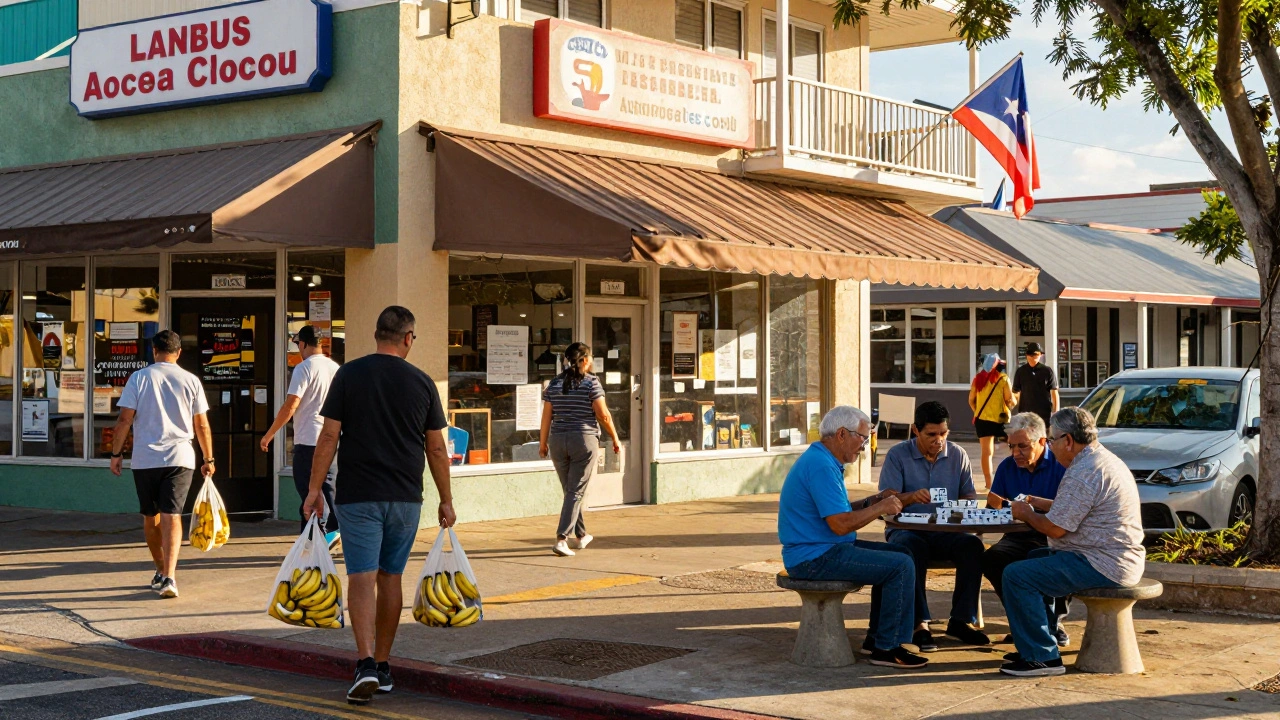
Walk down Main Street in Kissimmee on a Saturday morning, and you’ll hear Spanish spoken more often than English. Not just any Spanish-Puerto Rican Spanish. The rhythm, the slang, the way people say “¿Qué tal?” instead of “How’s it going?”-it’s unmistakable. Kissimmee, a small city just south of Orlando, has one of the largest Puerto Rican populations in the continental United States. In fact, nearly 40% of the city’s residents identify as Puerto Rican or of Puerto Rican descent. That’s more than in many neighborhoods in New York or Chicago. So why here? Why Kissimmee?
It Started With Jobs-And a Push From the Island
After Hurricane Maria hit Puerto Rico in 2017, over 130,000 people left the island in the months that followed. Many headed to Florida. But not all went to Miami or Orlando. A huge number ended up in Kissimmee. Why? Because jobs were waiting. Construction crews needed workers. Hotel staff were in short supply. Seasonal farm work in nearby Polk County was hiring. Kissimmee’s cost of living was lower than Orlando’s, and housing was easier to find. For families who had lost everything, it wasn’t just a move-it was survival.Before Maria, the Puerto Rican community in Kissimmee was already growing. Since the 1990s, families from the island had been relocating here for work in tourism and agriculture. But after 2017, the numbers exploded. By 2023, over 52,000 Puerto Ricans were living in Osceola County, where Kissimmee is the county seat. That’s more than the entire population of some U.S. cities.
The Chain Effect: Family Follows Family
People don’t move to a new place alone. They move because someone they know is already there. That’s how communities grow. In Kissimmee, early migrants from Puerto Rico found apartments, learned the bus routes, figured out where to buy plantains and yuca, and then called home. “There’s work here. The schools are okay. You can find arepas and pastelitos.” That word-of-mouth network became a pipeline.By 2020, over 60% of new Puerto Rican arrivals in Kissimmee said they came because a relative or friend was already living there. Churches like Iglesia Pentecostal El Calvario and Centro Cristiano La Luz became community hubs-not just for worship, but for job leads, school enrollment help, and even free legal advice. A single apartment complex on South Orange Avenue became home to over 30 Puerto Rican families within two years. It wasn’t planned. It just happened.
Cultural Anchors: More Than Just Food
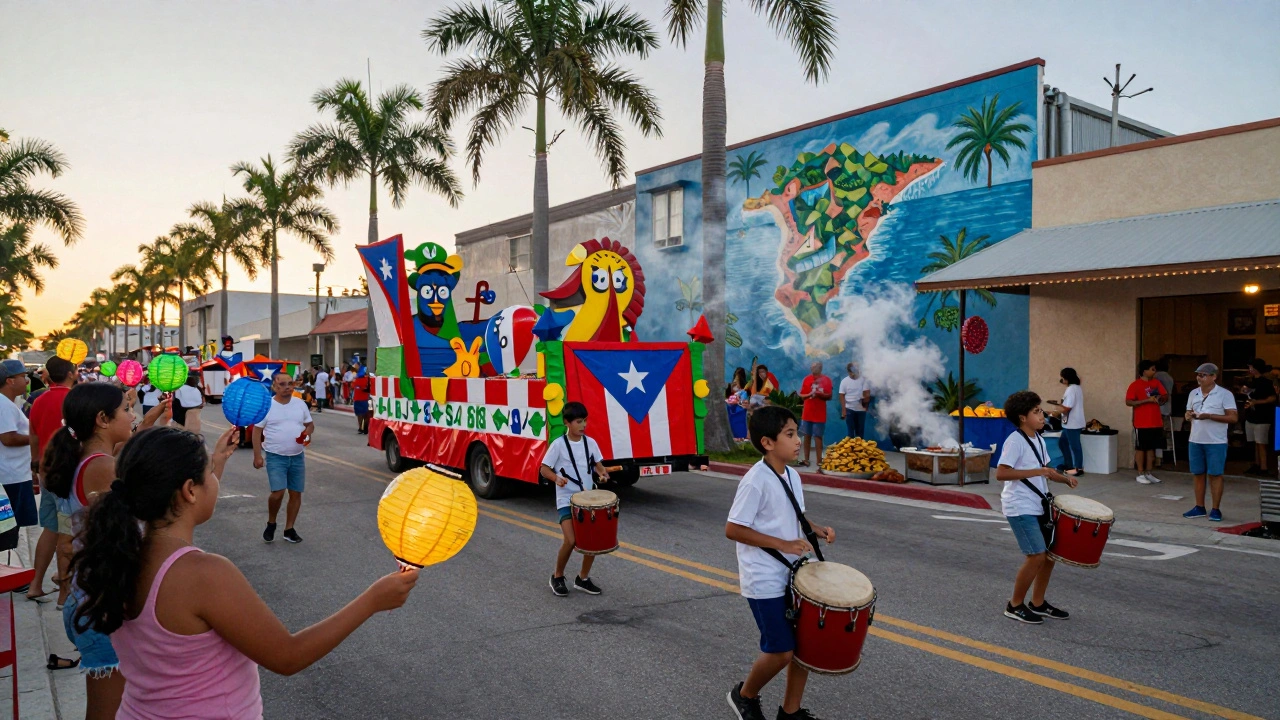
You can’t talk about Puerto Ricans in Kissimmee without talking about food. The smell of sofrito frying in the morning. The sound of bomba drums at the annual Fiesta de la Calle San Sebastián held every January. The line outside La Taqueria Boricua at noon. But it’s more than restaurants. It’s the bilingual signs on storefronts. The Spanish-language radio station Radio 102.5 playing reggaeton between traffic reports. The way the local library hosts storytime en español every Wednesday.Public schools in Kissimmee now have more Spanish-speaking students than English-only ones. The school district hired bilingual aides in every grade. Teachers get training in Puerto Rican cultural norms. In 2024, the city council officially recognized Día de la Independencia de Puerto Rico as a local observance. That’s rare for a city this size. It shows how deep the roots have gone.
Cost of Living: The Hidden Advantage
Orlando is expensive. Disney World drives up rents, insurance, and even grocery prices. Kissimmee? It’s right next door, but prices are 20-30% lower. A three-bedroom house in Kissimmee averages $280,000. In Orlando, it’s $420,000. Rent? $1,400 vs. $2,100. For families with limited income, that difference is life-changing.Plus, Kissimmee has a network of small businesses run by Puerto Ricans-bodegas, barbershops, tax preparers, remittance centers. You don’t need to drive 20 minutes to find someone who speaks your language and understands your paperwork. In Orlando, you might. In Kissimmee, you walk down the block.
It’s Not Just About Money-It’s About Belonging
Many Puerto Ricans who moved to Kissimmee say they didn’t just find a cheaper place to live-they found a place where they felt seen. In other parts of Florida, they were the minority. In Kissimmee, they’re the majority. Kids grow up hearing their culture reflected in the classroom, the grocery store, the local news. Parents don’t have to explain what pasteles are. They just hand them out at school events.There’s a quiet pride here. A sense that this isn’t just a stopover. It’s home. The Puerto Rican flag flies from porches. Grandparents sit on benches outside the community center, playing dominos. Teenagers post TikToks in Spanglish about their favorite taco spot. The culture isn’t being preserved-it’s being lived.
What’s Next? Growth, Not Gentrification
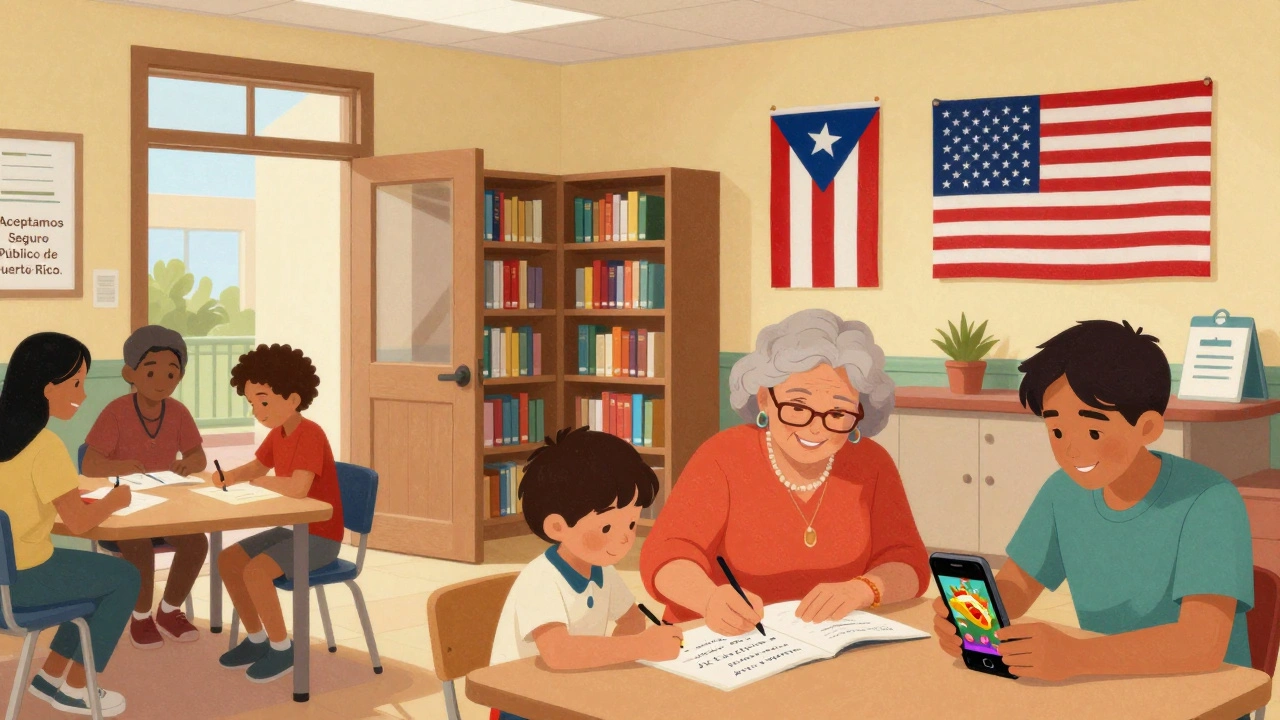
Kissimmee’s population has grown by over 30% since 2015. Most of that growth is from Puerto Ricans. The city is responding. New bilingual signage went up last year. The public library now has a dedicated section for Puerto Rican literature. A community center opened in 2024 with free English classes, citizenship workshops, and a small health clinic that accepts Puerto Rico’s public insurance.But there’s tension. Some long-time residents worry about changes. Traffic is worse. Schools are overcrowded. Some fear the city is losing its small-town feel. But most Puerto Ricans aren’t trying to erase anything. They’re adding to it. The annual Fiesta del Pueblo now includes a parade with both Puerto Rican and Cuban flags side by side. That’s not conflict-it’s community.
One thing is clear: Kissimmee isn’t just a city that happened to get a lot of Puerto Ricans. It became a destination because it offered something rare-affordability, opportunity, and a sense of belonging. For many, it’s the first place they’ve ever felt like they truly fit in. And that’s worth more than any paycheck.
Why did so many Puerto Ricans move to Kissimmee after Hurricane Maria?
After Hurricane Maria destroyed homes and infrastructure in 2017, over 130,000 Puerto Ricans left the island. Many chose Kissimmee because of affordable housing, job opportunities in construction and tourism, and an existing Puerto Rican community that offered support. Unlike larger cities, Kissimmee had available rentals and lower costs, making it a practical choice for families starting over.
Is Kissimmee the largest Puerto Rican community in Florida?
No, Miami has a larger total Puerto Rican population, but Kissimmee has the highest percentage of Puerto Ricans relative to its total population. Nearly 40% of Kissimmee’s residents are of Puerto Rican descent, making it one of the most concentrated Puerto Rican communities in the entire U.S., outside of Puerto Rico itself.
Do Puerto Ricans in Kissimmee still speak Spanish?
Yes, most households speak Spanish at home, especially among older generations and recent arrivals. But many children and teens are bilingual. Public schools, businesses, and city services now routinely offer bilingual support. Spanish isn’t fading-it’s becoming part of the city’s everyday language.
How has Kissimmee changed because of the Puerto Rican population?
Kissimmee has transformed culturally and economically. There are now dozens of Puerto Rican-owned businesses-from bakeries to remittance centers. The city hosts cultural festivals, bilingual school programs, and Spanish-language media. Even the local government has adapted, recognizing Puerto Rican holidays and hiring bilingual staff. The city’s identity is now deeply tied to its Puerto Rican community.
Are Puerto Ricans in Kissimmee U.S. citizens?
Yes. People born in Puerto Rico are U.S. citizens by birth. That means they can move freely to any state, vote in federal elections, and access the same government services as anyone else. This legal status made relocation easier and helped them build lives without immigration barriers.
What’s the biggest misconception about Puerto Ricans in Kissimmee?
That they’re temporary or just here for low-wage jobs. Many have been here for decades. Families have bought homes, started businesses, sent kids to college, and become teachers, nurses, and small business owners. They’re not just passing through-they’re building the future of Kissimmee.
sumraa hussain
December 10, 2025 AT 12:46Just drove through Kissimmee last week and was stunned. One minute you’re in a typical Florida strip mall, next you’re hearing bomba drums from a backyard party. The arepas stand on Main Street? Sold. This isn’t migration-it’s a quiet cultural takeover, and honestly? It’s beautiful.
No one’s forcing anyone out. People just… showed up, worked hard, and built something real. That’s more than I can say for most towns.
Raji viji
December 12, 2025 AT 11:23LMAO you guys act like this is some revolutionary phenomenon. Puerto Ricans moved here because it’s cheap, the weather’s familiar, and the cops don’t hassle you for speaking Spanish. It’s not magic-it’s capitalism with a side of diaspora logistics.
And don’t get me started on ‘belonging.’ Half these folks are still sending remittances to San Juan. This ain’t home-it’s a temporary fix with better Wi-Fi.
Rajashree Iyer
December 12, 2025 AT 12:22There’s something sacred about how communities rise from ruin. Hurricane Maria didn’t just displace people-it cracked open the soul of a nation and spilled it across Florida’s sunbaked asphalt.
Kissimmee didn’t just absorb them-it embraced them like a long-lost sibling who finally came home with nothing but a suitcase and a song. And now? The song echoes in every sidewalk, every school bell, every abuela’s kitchen.
This isn’t demographics. This is poetry written in plantains and spanglish.
Parth Haz
December 13, 2025 AT 06:55It’s important to recognize the structural factors behind this demographic shift. Affordable housing, labor demand in seasonal industries, and pre-existing diaspora networks created a perfect convergence of push and pull factors.
The city’s institutional adaptations-bilingual signage, cultural recognition, expanded services-are not merely reactive but demonstrate a commendable level of civic responsiveness. This model could serve as a blueprint for other mid-sized American cities facing similar influxes.
Vishal Bharadwaj
December 14, 2025 AT 04:20Wait so 40% Puerto Rican means the city is ‘majority’? LOL no. 40% is still a plurality. You think that’s a lot? Try 70% in some barrios in San Juan. Also, ‘largest outside Puerto Rico’? Bro, it’s not even top 5 in raw numbers. NYC’s got 800k. Chicago’s got 200k. Kissimmee’s got 52k.
Stop romanticizing a suburb. It’s just cheaper rent and better sun.
anoushka singh
December 15, 2025 AT 16:30Okay but… how do the kids feel? Like, do they get teased for speaking Spanglish? Do their teachers know how to handle Puerto Rican slang? I just wonder if it’s all sunshine and arepas or if there’s some quiet stress underneath.
Also, who cleans up after the Fiesta? I’m asking for a friend. (It’s me.)
Jitendra Singh
December 17, 2025 AT 05:11I’ve lived in Kissimmee for 15 years. Before 2017, it was quiet. Now it’s alive. I used to go to the grocery store and feel like a stranger. Now I hear my niece’s name called in Spanish at the checkout. I don’t understand half of it-but I smile.
That’s the quiet magic. No speeches. No protests. Just people living, side by side, in a way that feels right.
Madhuri Pujari
December 18, 2025 AT 06:44Oh wow, another ‘beautiful cultural tapestry’ fairy tale. Let’s be real: the city’s crumbling. Schools are overcrowded, traffic’s a nightmare, and the local government is just throwing bilingual signs up like confetti while ignoring infrastructure.
And don’t even get me started on ‘they’re U.S. citizens so it’s fine’-yeah, so are the 300k people in Detroit who got left behind. Why is this narrative always about ‘belonging’ and never about responsibility?
It’s not a love story. It’s a crisis with better marketing.
Sandeepan Gupta
December 18, 2025 AT 23:36For anyone thinking about moving to Kissimmee or supporting the community: learn basic Spanish phrases. Offer to help with paperwork. Volunteer at the library’s storytime. Small actions build bridges.
Also, if you’re a business owner-hire bilingual staff. It’s not charity. It’s smart economics. And if you’re a parent-encourage your kids to make friends across cultures. That’s how real integration happens.
Tarun nahata
December 19, 2025 AT 09:01This is the American dream reimagined-not in a skyscraper, but in a corner bodega with a Puerto Rican flag hanging above the plantains. People didn’t come to escape-they came to rebuild. And they didn’t just bring their luggage. They brought their music, their pride, their abuela’s recipes.
Kissimmee didn’t just welcome them. It woke up. And now? It’s glowing.