
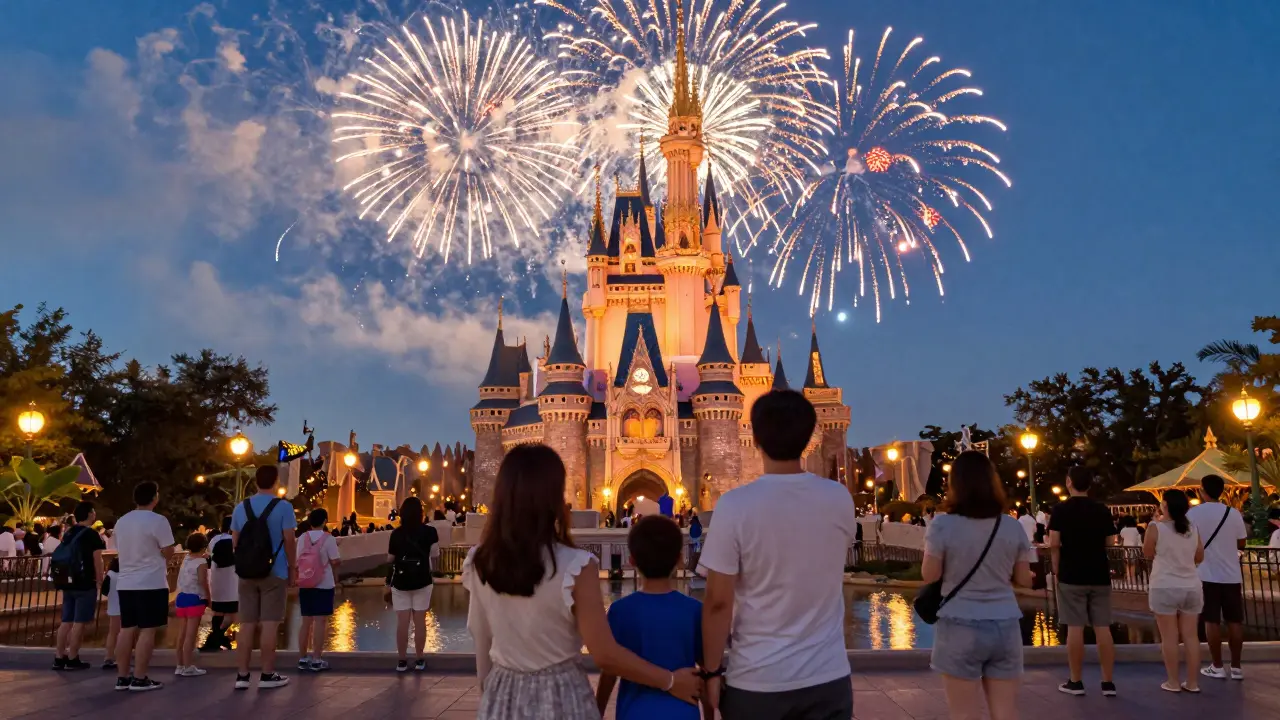
Orlando, Florida, isn’t just the top tourist city in the United States-it’s the only one that pulls in over 75 million visitors every year. That’s more than New York City, Los Angeles, and Las Vegas combined. If you’ve ever stood in line for Space Mountain or watched fireworks over Cinderella Castle, you’ve been part of that number. This isn’t a fluke. Orlando has spent decades building a tourism machine unlike any other in the country, and it shows up in the data every single year.
Why Orlando Wins Every Time
It’s not just Disney World. Though Walt Disney World Resort alone welcomed nearly 58 million guests in 2024, Orlando’s draw goes far beyond Mickey Mouse. Universal Orlando Resort added another 15 million visitors last year, with new attractions like The Super Nintendo World and the expansion of the Wizarding World of Harry Potter keeping crowds coming back. Then there’s SeaWorld, LEGOLAND Florida, and dozens of smaller theme parks and water parks scattered across the metro area.
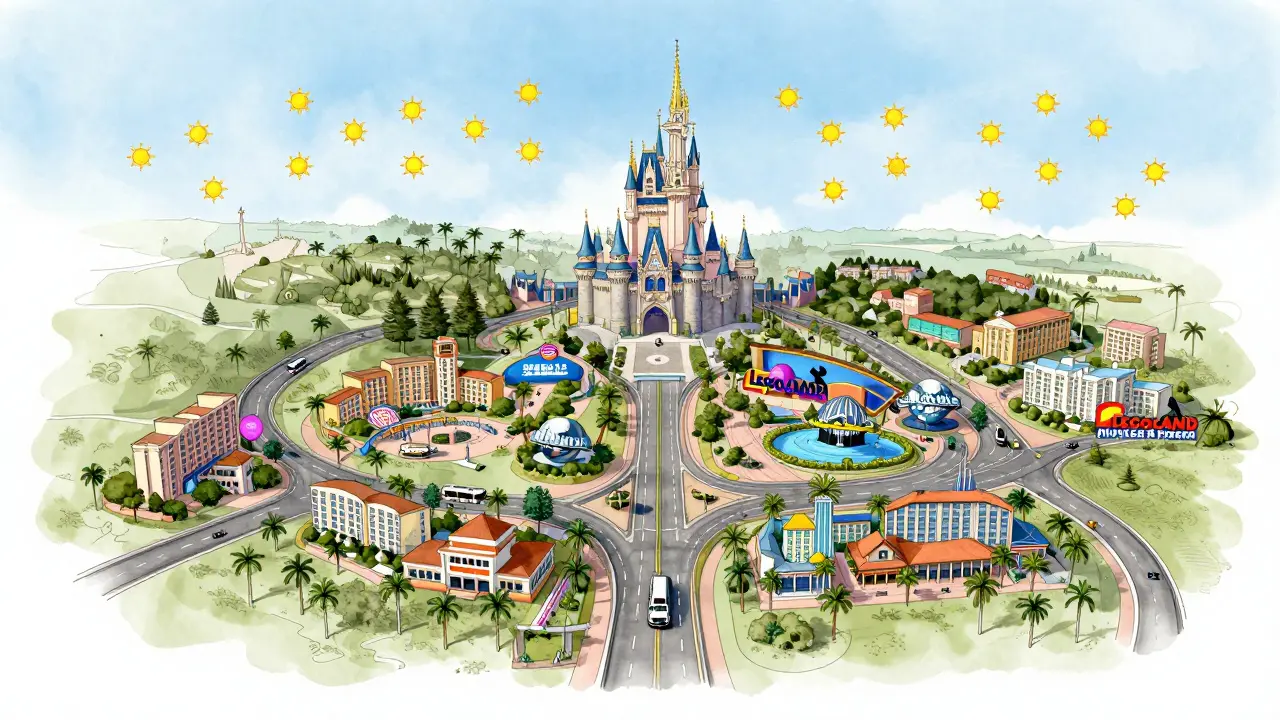
But here’s what most people don’t realize: Orlando isn’t just a theme park town. It’s a full-service vacation hub. You’ve got over 100,000 hotel rooms within a 20-mile radius. That’s more than any other city in the U.S. And nearly every one of them is built for families-think suites with kitchenettes, poolside movie nights, and free shuttles to the parks. The infrastructure is designed for one thing: keeping tourists comfortable, entertained, and spending money.
The Numbers Don’t Lie
In 2024, Orlando’s visitor numbers hit 75.8 million, according to the Orlando Economic Partnership. That’s up 4% from 2023 and nearly 15% higher than pre-pandemic levels. For comparison, New York City had about 66 million visitors in the same year, and Las Vegas pulled in 42 million. Even Miami, Florida’s other big tourist magnet, only got around 28 million.
Why does Orlando keep growing? Because it’s not just about one park. It’s about the ecosystem. Families plan trips months in advance, booking multi-day stays, dining packages, and even vacation rentals. The average visitor spends $1,350 per person on lodging, tickets, food, and souvenirs. That’s not a weekend trip-it’s a full-blown vacation economy.
What Makes Orlando Different From Other Cities?
Think about other major cities. New York has museums, Broadway, and skyline views. Los Angeles has Hollywood and beaches. Chicago has deep-dish pizza and architecture tours. But none of them offer what Orlando does: a complete, immersive, repeatable experience.
Disney and Universal don’t just open rides-they build entire worlds. You don’t just watch a movie at Universal-you walk through Diagon Alley, taste Butterbeer, and get a wand that casts spells. At Disney, you can meet characters you’ve watched since childhood, eat food shaped like your favorite cartoon, and fall asleep to fireworks over a castle. These aren’t attractions. They’re emotional experiences. And people will travel across the world to relive them.
Plus, Orlando’s weather helps. With over 300 days of sunshine a year and mild winters, it’s one of the few places in the U.S. where you can reliably plan a beach-and-parks vacation any time of year. That’s why so many families from the Northeast and Midwest choose Orlando for their winter break. It’s not just fun-it’s practical.
Who’s Really Visiting?
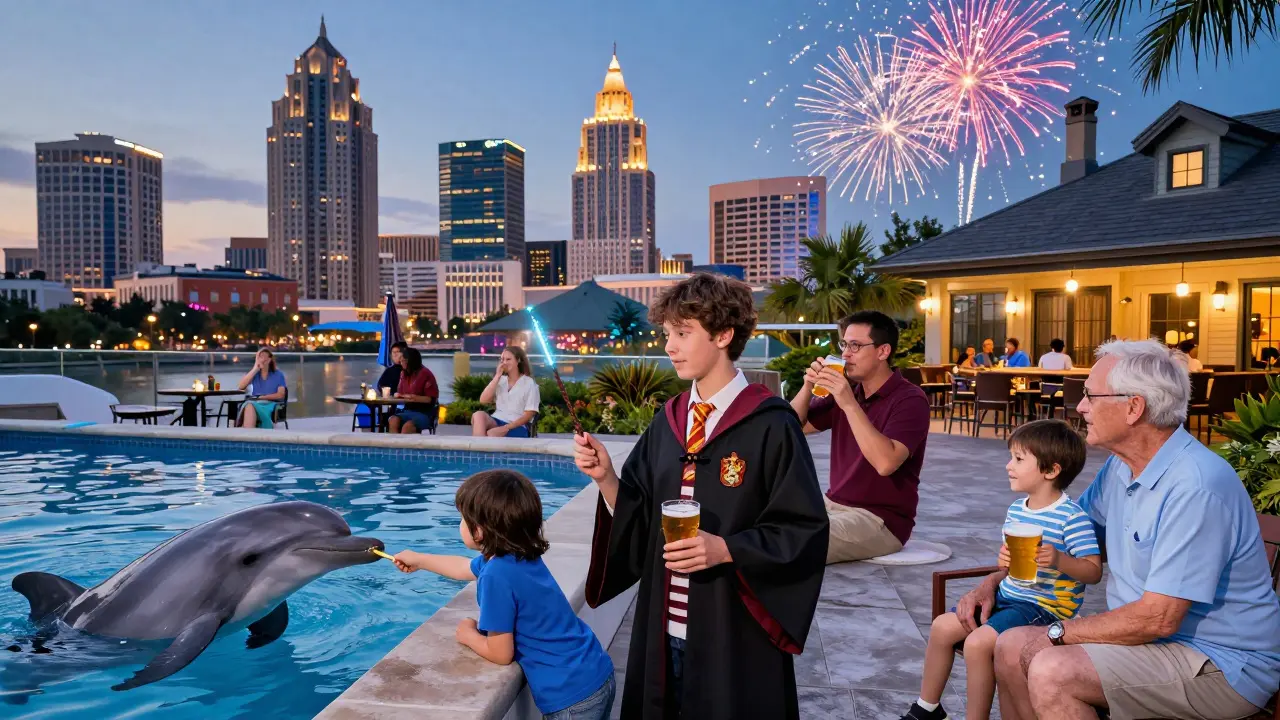
Orlando doesn’t just attract kids and parents. In 2024, nearly 30% of visitors were adults aged 25 to 44 without children. That’s a big shift from just ten years ago. Why? Because Orlando has grown up. There are now craft breweries, rooftop bars, live music venues, and upscale dining spots like The Boathouse and The Ravenous Pig. Couples come for the nightlife. Groups of friends come for the thrill rides. Even retirees book multi-week stays in vacation homes near the parks.
International tourism is also booming. In 2024, over 12 million international visitors came to Orlando-up from 8 million in 2019. The biggest groups? Canadians, Brazilians, and visitors from the United Kingdom. Many of them fly directly into Orlando International Airport, which now has nonstop flights from 25 countries.
Is Orlando Still the Best Choice for Families?
Yes-and here’s why. If you’re planning a family vacation, Orlando gives you more value per dollar than any other destination in the U.S. A 5-day ticket to Disney World costs about $1,000 for a family of four. Add in a hotel with free breakfast and parking, and you’re still under $2,500 for a full week. Compare that to a week in Hawaii, where flights alone can cost that much.
And the options? They’re endless. Want to spend one day at Disney, another at Universal, and the third at a water park? Done. Want to skip the parks entirely and hit the Kennedy Space Center or the Orlando Science Center? Easy. Want to rent a house with a private pool and cook your own meals? Thousands of options are available.
There’s no other city in the U.S. that gives you this kind of control, variety, and affordability all in one place.
What About Other Florida Cities?
People often ask: What about Miami? Or Tampa? Or Fort Lauderdale? They’re great-but they don’t compete on the same level. Miami draws a different crowd: young adults, beach lovers, and international travelers looking for nightlife and culture. Tampa has the Busch Gardens theme park and the Florida Aquarium, but it doesn’t come close to Orlando’s scale. Fort Lauderdale is a cruise port and beach town, not a multi-day vacation destination.
Even Disney’s own parks in California don’t match Orlando’s numbers. Disneyland Resort in Anaheim draws about 18 million visitors a year-less than a third of what Walt Disney World pulls in. The difference? Orlando has four major parks and a full resort infrastructure. California has two parks and a downtown shopping district.
What’s Next for Orlando Tourism?
Orlando isn’t resting. In 2025, Disney is opening a new “Toy Story” themed land at Disney’s Hollywood Studios. Universal is expanding its Epic Universe park, which will open in summer 2025 and add a third major theme park to the area. That’s on top of new hotels, restaurants, and entertainment districts popping up every year.
The airport is adding more international routes. The city is investing in better public transit between resorts. And the state of Florida is pushing marketing campaigns targeting Europe and Latin America.
One thing’s clear: Orlando isn’t just the #1 tourist city in America. It’s becoming the global capital of family entertainment.
Final Thought: It’s Not About the Parks
People say Orlando is all about theme parks. But the real magic is in the planning. It’s the way a mom can book a vacation package that includes tickets, hotel, meals, and even a character breakfast-all in one click. It’s the way a teenager can ride a roller coaster, then grab a latte at a coffee shop that looks like it’s from the future. It’s the way a grandparent can sit under a palm tree and watch their grandkids laugh while fireworks explode overhead.
That’s not just tourism. That’s memory-making on a massive scale. And no other city in the U.S. does it better.
Is Orlando really the most visited city in the U.S.?
Yes. Orlando consistently ranks as the most visited city in the United States, with over 75 million visitors in 2024. That’s more than New York City, Los Angeles, and Las Vegas combined. The numbers come from the Orlando Economic Partnership and are verified by state tourism data.
Why do so many people choose Orlando over other Florida cities?
Orlando offers the highest concentration of theme parks and family-friendly attractions in the country. With Disney World, Universal Orlando, SeaWorld, and LEGOLAND all in one metro area, it’s the only place where you can spend a week without repeating an experience. Other Florida cities like Miami or Tampa have their own appeal, but they don’t offer the same scale or variety for families.
How much does a typical Orlando vacation cost?
A typical family of four can expect to spend between $2,000 and $3,500 for a 5-day trip, including lodging, park tickets, food, and transportation. Staying at a vacation rental with a kitchen can bring costs down significantly. Compared to destinations like Hawaii or Disney California, Orlando offers more value for the same budget.
Are there good options for adults without kids in Orlando?
Absolutely. Orlando has a growing scene for adults: rooftop bars, live music venues, craft breweries, upscale restaurants, and even art galleries. Areas like Winter Park, Downtown Orlando, and the Milk District offer nightlife and culture without needing to visit a theme park. Many visitors come just for the food and atmosphere.
When is the best time to visit Orlando to avoid crowds?
The least crowded times are mid-January to early February, late August to mid-September, and the week after Thanksgiving. These periods avoid school holidays and major events. Even during peak times, Disney and Universal have implemented virtual queues and mobile ordering to reduce wait times.
Is Orlando safe for tourists?
Yes. The main tourist areas-including Disney World, Universal, and the International Drive corridor-are extremely safe, with high security presence and dedicated patrol units. Like any major city, it’s wise to stay aware of your surroundings, but violent crime in tourist zones is rare. Most visitors report feeling safer here than in their own home cities.
What’s the next big thing coming to Orlando?
Epic Universe, Universal’s new third theme park, opens in summer 2025. It will feature five new themed lands, including one based on the Minions and another on the Super Nintendo World. Disney is also expanding its Hollywood Studios with a new Toy Story land. These additions will keep Orlando at the top of the tourism rankings for years to come.
Henry Kelley
December 24, 2025 AT 01:42Orlando’s insane numbers make sense when you think about it - it’s like a giant toy store for adults with kids (and even adults without ’em). I went last year and didn’t leave the resort for four days. Didn’t miss home once.
Victoria Kingsbury
December 24, 2025 AT 07:17Let’s be real - the infrastructure here is unmatched. 100K+ hotel rooms? That’s not luck, that’s strategic urban planning on a corporate scale. And the fact that they’ve got dedicated shuttle networks, mobile ordering, and even on-site medical centers? This isn’t tourism - it’s hospitality engineering at its most refined.
Tonya Trottman
December 25, 2025 AT 07:4675 million visitors? Please. That’s not ‘tourism,’ that’s mass delusion wrapped in Mickey ears. You call that ‘memory-making’? It’s emotional consumerism. People pay $2,500 to be herded through a CGI fantasy while being sold overpriced churros. And you call that culture? I’ve seen more authentic human connection in a Walmart parking lot on a Tuesday.
Rocky Wyatt
December 26, 2025 AT 11:54I used to love Orlando. Now I can’t even look at a Minnie Mouse hat without feeling sick. It’s not fun anymore - it’s a capitalist nightmare. The lines, the noise, the screaming kids, the $15 bottled water. I cried in line for Space Mountain last year. Not from joy. From regret.
Santhosh Santhosh
December 27, 2025 AT 20:14As someone from India, I found Orlando fascinating not just because of the parks, but because of how deeply organized everything is - from the way the queues are managed with virtual systems, to how the staff remembers your name after one interaction. It’s not just about rides; it’s about creating a seamless emotional journey. Back home, even our best attractions feel chaotic by comparison. I spent three weeks there and still feel like I only scratched the surface.
Ray Htoo
December 28, 2025 AT 19:27Orlando’s secret sauce? It’s not the rides - it’s the nostalgia factory. You walk into Diagon Alley and suddenly you’re 10 again, holding your first wand, heart pounding like you’re about to cast your first spell. That’s not entertainment. That’s time travel. And yeah, it’s expensive - but what’s the cost of a memory that lasts a lifetime? I took my dad there last year. He’d never been to a theme park. He cried when the fireworks started. I’ll never forget it.
Natasha Madison
December 30, 2025 AT 02:08They’re lying about the numbers. 75 million? That’s just people who flew in on government-subsidized flights. The whole thing’s a propaganda campaign to distract from Florida’s real problems - schools crumbling, hospitals overloaded, and kids being dragged into Disney to avoid real life.
Sheila Alston
December 31, 2025 AT 00:17People act like Orlando is some magical wonderland, but let’s not pretend it’s not a corporate dystopia. The way they manipulate families into spending thousands on ‘packages’ - it’s predatory. And don’t get me started on the environmental damage. All those pools, all that water, all that energy for fake snow and air-conditioned castles? It’s unethical.
sampa Karjee
January 1, 2026 AT 01:26Comparing Orlando to Paris or Kyoto is like comparing a Walmart to the Louvre. This isn’t culture - it’s commodified fantasy. The fact that Americans celebrate this as a pinnacle of civilization reveals the depth of our cultural decay. I visited once. Felt like I’d been trapped in a neon-lit theme park version of a child’s fever dream.
Patrick Sieber
January 1, 2026 AT 11:23My Irish mates thought I was mad when I said I was going to Orlando for vacation. Ended up loving it. The vibe’s weirdly chill once you get past the hype. Got a pint at a brewery near Universal, met a guy from Brazil who’d been there 3 times. We talked about life, not rides. Turns out, Orlando’s got soul if you look past the princesses.
Reshma Jose
January 2, 2026 AT 21:37My mom’s 70, hates crowds, never liked parks. Last year we rented a house with a pool and spent 5 days doing zero theme parks. Went to the farmers market, watched the sunset at Lake Eola, ate at that one Thai place on Mills. She said it was the best vacation she’s ever had. Orlando’s not just for kids - it’s for anyone who wants to relax in sunshine with options.