
Hardware Wallet: Secure Crypto Storage Explained
A hardware wallet, a physical device designed to store cryptocurrency private keys offline. Also known as a cold wallet, it’s the most secure way to hold Bitcoin, Ethereum, and other digital assets—especially if you’re not planning to trade daily. Unlike apps or online exchanges, a hardware wallet never connects to the internet on its own. That means hackers can’t steal your coins through phishing, malware, or a breached server. If you own any crypto, this isn’t optional—it’s basic protection.
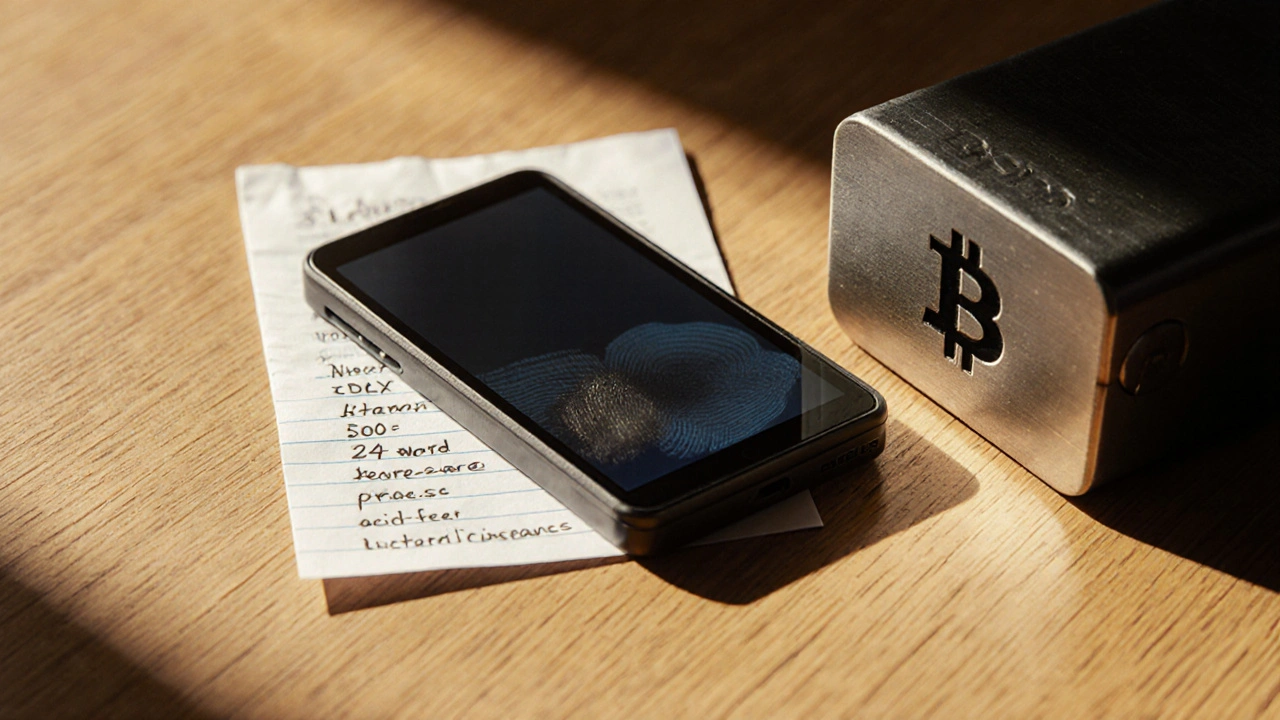
Think of it like a digital safe. You keep your keys inside, and only unlock them when you need to send funds. Popular models like Ledger and Trezor let you connect via USB or Bluetooth to sign transactions, but your private keys stay locked inside the device. Even if your computer gets infected, your crypto stays safe. You also get a recovery phrase—usually 12 or 24 words—that lets you restore access if the device breaks or gets lost. Write it down. Keep it in a fireproof box. Don’t screenshot it. Don’t email it. This one thing is more important than your password.
Related to this are crypto security, the practices and tools that protect digital assets from theft and loss, which includes using strong PINs, enabling two-factor authentication on your computer, and avoiding public Wi-Fi when signing transactions. Then there’s cryptocurrency storage, the broader category covering everything from hot wallets to paper backups. Hardware wallets sit at the top of that list—not because they’re fancy, but because they’re simple and reliable. You don’t need to be a tech expert to use one. Just plug it in, confirm the transaction on its screen, and press a button.
Many people think keeping crypto on an exchange is fine. But exchanges get hacked. They freeze accounts. They go bankrupt. In 2022 alone, over $3 billion in crypto was lost to exchange failures and hacks. A hardware wallet doesn’t fix every risk—but it removes the biggest one. It’s the difference between leaving your cash in a hotel room and locking it in a bank vault.
You’ll find posts here that explain how to set up your first device, how to verify firmware updates, and why some wallets support hundreds of coins while others don’t. There are guides on backup best practices, how to spot fake devices, and what to do if you lose your recovery phrase. None of it is guesswork. Every tip here comes from real users who’ve been through the mistakes—and learned how to avoid them.
- November 19 2025
- 12 Comments
- Lucas Harrington
How to Secure Bitcoin Wallet: Essential Steps to Protect Your Crypto
Learn how to secure your Bitcoin wallet with proven steps: use hardware wallets, backup your recovery phrase, enable 2FA, avoid exchanges, and guard against phishing. Protect your crypto from theft and loss.
- Disney World Vacations (35)
- Kissimmee Florida (29)
- Florida travel (26)
- Crypto & Blockchain (10)
- Information & Privacy (5)
- Blockchain & Cryptocurrency (4)
- Disney Parks & Tips (3)
- Disney History (3)
- Travel (2)
- Travel Tips (2)
Categories
- January 2026 (6)
- December 2025 (29)
- November 2025 (41)
- October 2025 (16)
- September 2025 (6)
- August 2025 (3)
- July 2025 (3)
- June 2025 (2)
- May 2025 (2)
- April 2025 (1)
- March 2025 (6)
- February 2025 (11)
Archives
- Florida beaches
- Disney World
- Florida
- Florida travel
- Kissimmee demographics
- Kissimmee
- Kissimmee Florida
- Orlando tourism
- Disney park hours
- Disney World tips
- Disney vacations
- Disney 100
- theme park tips
- Disney celebration
- tourism
- Disney secrets
- Disney history
- travel
- Disney World crowd calendar
- Disney World cost