
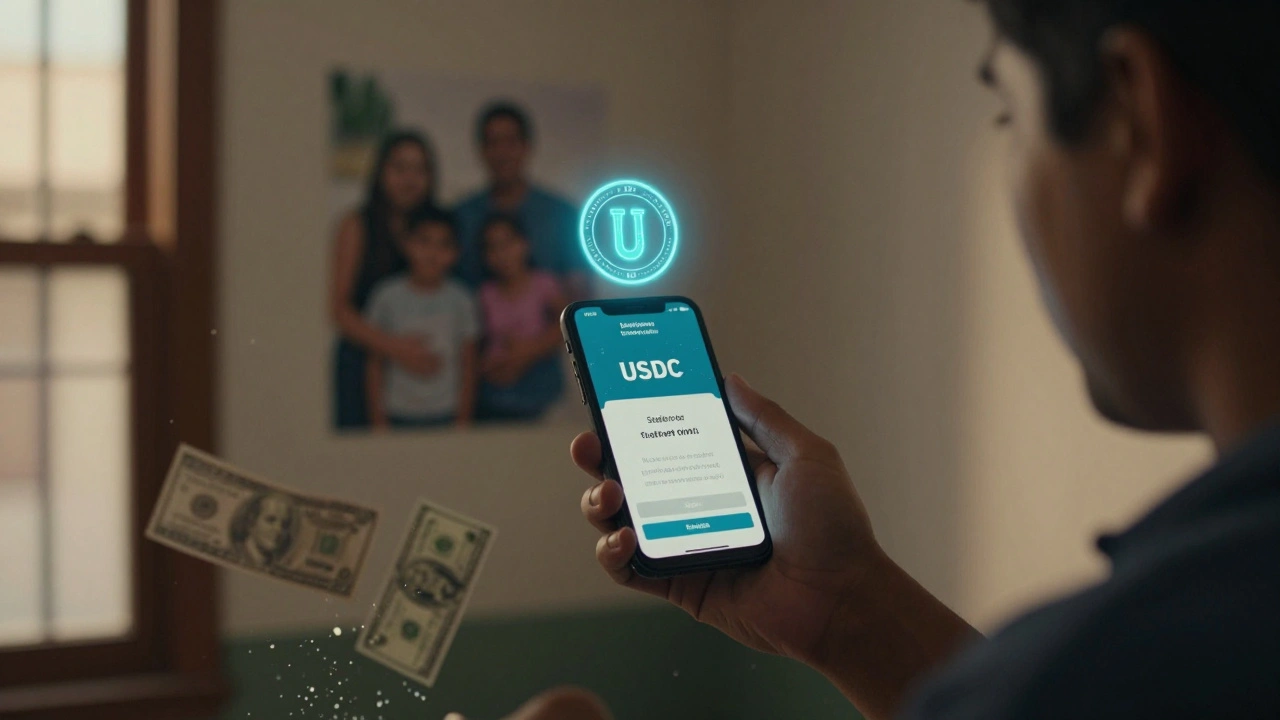
Every year, migrant workers send over $600 billion to their families back home. For many, that money is rent, medicine, school fees - survival. Yet, the system they rely on charges nearly 7% just to send it. That’s $35 on a $500 transfer. And it takes days. Meanwhile, a new way to move money is quietly replacing the old: stablecoin remittances.
Why Traditional Remittances Are Still Broken
The legacy system runs on banks that talk to other banks through a slow, paper-heavy network called SWIFT. Each step adds time, fees, and opacity. A transfer from the U.S. to Mexico might go through three intermediary banks. Each one takes a cut. Currency conversion happens twice - once on the way out, once on the way in - with hidden markups that can add another 3-5% on top of the stated fee. And if you send money on a Friday? Good luck getting it to your family before Monday. The World Bank’s 2025 report shows the global average fee for formal remittances is still 6.49%. For small amounts, it’s even worse. Sending $100 can cost you $8 or more. That’s not a service - it’s a tax on poverty.How Stablecoins Cut the Cost to Under 1%
Stablecoins like USDC and USDT are digital tokens backed 1:1 by U.S. dollars or other stable assets. They move on blockchains - not bank networks. And that changes everything. When you send $500 via stablecoin, here’s what happens: You convert your dollars to USDC. It’s sent over the Ethereum or Stellar blockchain. In under 15 seconds, it lands in the recipient’s wallet. They convert it back to pesos, rupees, or naira - instantly. The total fee? Often under 0.5%. That’s a 90% drop in cost. Transak’s 2025 analysis confirms this: stablecoin remittances consistently charge less than 1%, while traditional systems hover near 6.5%. For a family sending $200 a month, that’s $120 saved every year. For a small business paying suppliers in Nigeria? That’s hundreds of dollars in savings per transaction.Speed: From Days to Seconds
SWIFT transfers take 3 to 5 business days. Even wire transfers with faster processors like Western Union still take 24-48 hours. Why? Because they batch transactions, work only during banking hours, and rely on manual reconciliation. Stablecoins don’t wait. They run 24/7. No weekends. No holidays. No cutoffs. A transfer from California to the Philippines can complete in under 3 minutes. Visa’s 2023 pilot showed stablecoin settlements working on Christmas Day - something no bank system could do. In 2025, BVNK reported that 65% of businesses using stablecoin rails cut settlement times from days to minutes. That’s not an improvement - it’s a revolution. For gig workers paid in crypto, it means getting paid the same day. For families in crisis, it means money arrives before the electricity gets cut off.
Compliance Built In, Not Bolted On
People think crypto is lawless. That’s outdated. Today’s regulated stablecoins are among the most compliant financial tools on the planet. USDC, issued by Circle, is subject to daily audits. Its reserves are held in U.S. Treasury bills and cash. Every transaction can be traced. Smart contracts now embed KYC and AML checks directly into the payment flow. If a sender is on a sanctions list, the transfer won’t go through - automatically. No human review. No delay. Compare that to traditional systems, where compliance happens after the fact. Banks flag suspicious activity weeks later. Accounts get frozen. Money gets stuck. Stablecoins prevent the problem before it starts. The EU’s MiCA regulation and the U.S. GENIUS Act now require stablecoin issuers to prove they hold 1:1 reserves and follow strict AML rules. That’s not a loophole - it’s a firewall. Regulators aren’t blocking stablecoins. They’re demanding them.Real Stories, Real Savings
A welder in Houston sends $400 to his sister in Oaxaca every month. Last year, he paid $28 per transfer through Western Union. This year, he uses a stablecoin app. Fee: $1.80. Time: 8 minutes. He’s saved $310 in 10 months. A small textile business in Lagos gets paid by a client in Germany. Previously, payments took 5 days and lost 4% to FX fees. Now, they invoice in USDC. The client pays in minutes. The business converts to naira at a live rate with no hidden spread. Profit margin improved by 6%. Reddit users in r/CryptoCurrency reported transfers from Mexico to Vietnam using USDT - fees under 0.5%, settlement in 15 minutes. That’s faster than sending a text message.Where It Still Falls Short
This isn’t magic. There are gaps. First, not everyone has a smartphone or internet access. In rural parts of Africa or Southeast Asia, stablecoin remittances are useless without local cash-out partners. That’s why successful platforms partner with mobile money agents, ATMs, and retail stores - turning digital tokens into physical cash. Second, some countries ban crypto. China, India, and Nigeria have had shifting policies. Even if the tech works, local laws can block access. Third, the user experience still feels technical. Sending crypto requires a wallet, a seed phrase, QR codes. For older users or those unfamiliar with tech, it’s intimidating. The best platforms now hide all that - you just enter a phone number, and the system handles the rest. The blockchain stays behind the scenes.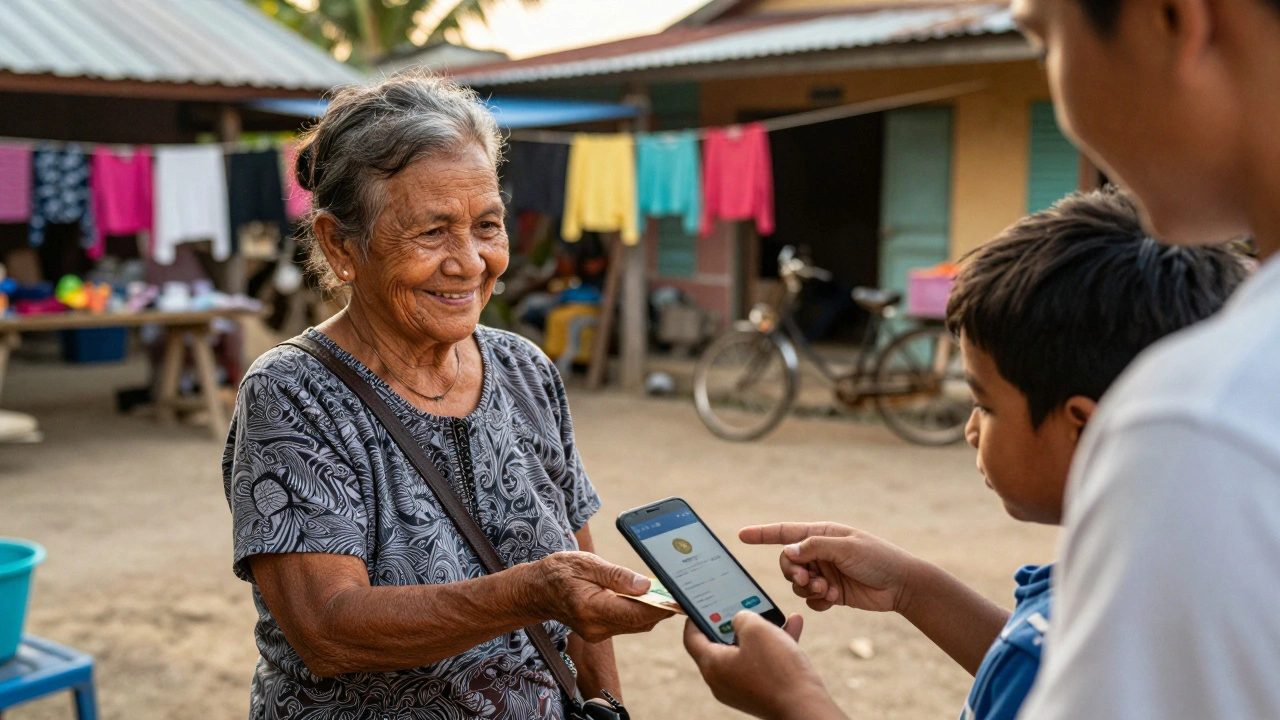
Who’s Winning Right Now?
Big players are moving fast. Visa and Mastercard are testing stablecoin settlement rails. Ripple, Circle, and Transak are building full-stack remittance platforms. In June 2025, Singapore and Indonesia launched the first central bank-backed stablecoin corridor - processing $2.3 billion in its first month. McKinsey estimates stablecoins now make up 3% of all global cross-border payments. That’s $6 trillion in volume. By 2027, that could hit 15-20% of the $1 trillion remittance market. The real winners? Migrant workers. Small businesses. Families in countries with high inflation - like Argentina, Nigeria, or Lebanon - where holding U.S. dollars in stablecoin form is safer than keeping cash in local banks.The Future Is Programmable Money
Stablecoins aren’t just faster or cheaper. They’re programmable. Imagine a parent in Florida sending $200 to their child in Manila - but the money only unlocks when the child pays their tuition. Or a contractor in Texas who only releases payment to a supplier in Brazil once a shipment is verified via GPS. That’s not sci-fi. It’s already being built. By 2030, analysts at McKinsey and J.P. Morgan predict stablecoins will handle 25-30% of global remittances. That’s not a prediction - it’s an inevitability. The old system is too slow, too expensive, too broken to survive. The question isn’t whether stablecoins will replace legacy rails. It’s how fast the rest of the world will catch up.Getting Started: What You Need to Know
If you’re thinking about trying stablecoin remittances, here’s how:- Choose a regulated stablecoin: USDC is the safest bet for compliance. USDT works too, but has more regulatory scrutiny.
- Use a trusted platform: Look for services like Circle, Transak, or BVNK that offer direct bank integration and local cash-out partners.
- Check payout options: Make sure the recipient can convert to cash locally - via mobile wallet, agent, or ATM.
- Start small: Send $50 first. Test the speed and reliability before scaling up.
- Don’t store large amounts in wallets: Convert to local currency as soon as you receive it.
Nathaniel Petrovick
December 5, 2025 AT 03:44thank you for writing this.
Jason Townsend
December 5, 2025 AT 07:26Honey Jonson
December 7, 2025 AT 01:59still scared to send more though lol
Angelina Jefary
December 8, 2025 AT 22:50Destiny Brumbaugh
December 10, 2025 AT 20:43Antwan Holder
December 12, 2025 AT 02:44we're turning love into a gas fee.
Jennifer Kaiser
December 14, 2025 AT 02:26Elmer Burgos
December 15, 2025 AT 05:27also my abuela loves the atm option. she doesn't need to know what blockchain is
Sally McElroy
December 15, 2025 AT 23:47Jeroen Post
December 17, 2025 AT 08:31Jasmine Oey
December 19, 2025 AT 05:41Marissa Martin
December 20, 2025 AT 00:14Sara Escanciano
December 21, 2025 AT 14:47TIARA SUKMA UTAMA
December 23, 2025 AT 03:46